
Most brands are creating content… that nobody trusts
Ads are everywhere. Polished, scripted, and often ignored.
But there’s one type of content people actually believe:
👉 User Generated Content (UGC)
From customer reviews to TikTok videos, UGC has become one of the most powerful marketing tools today.

In this guide, you’ll learn:
- What UGC really is
- Why it works better than traditional marketing
- How to use it step-by-step to grow your business
Table of Contents
What Is User Generated Content (UGC)?
User Generated Content (UGC) is any content created by your customers instead of your brand.
This includes:
- Reviews and testimonials
- Photos and videos
- Social media posts
- Comments and feedback
👉 In short: it’s real people talking about your brand
📸 Examples of UGC
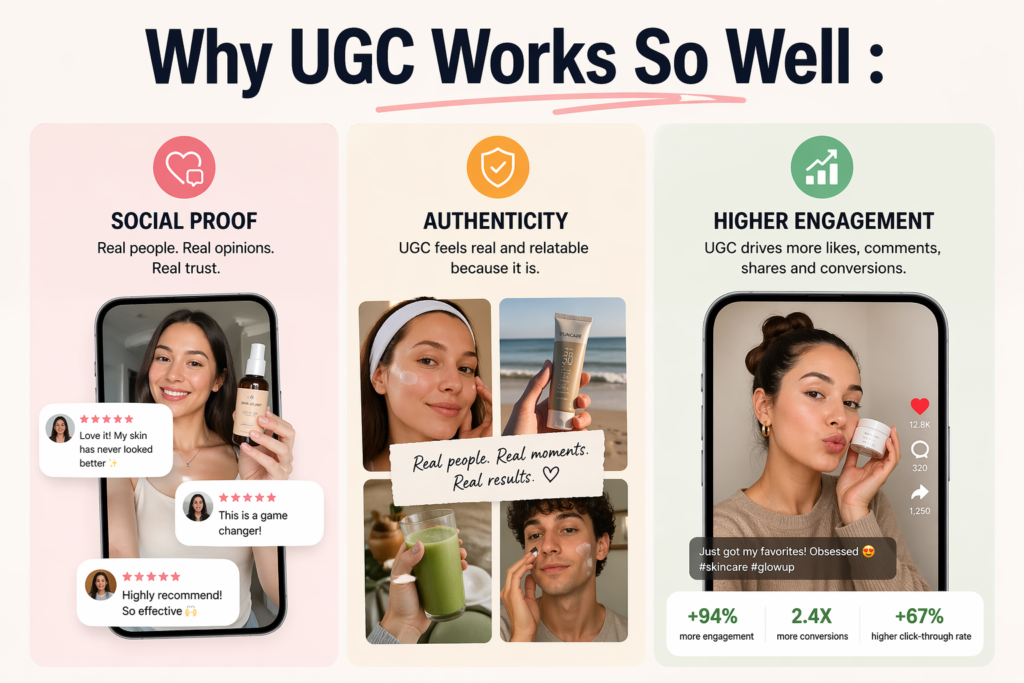
Why UGC Works So Well
✅ 1. Social Proof
People trust other people.
When users see others using your product, they feel more confident buying.
✅ 2. Authenticity
UGC is raw and real.
Unlike ads, it doesn’t feel forced — and that’s why it converts better.
✅ 3. Higher Engagement
UGC often gets:
- more likes
- more shares
- more comments
👉 Because it feels natural
Real Examples of UGC in Action
🛒 1. Customer Reviews
Products with reviews convert much better than those without.
👉 Always encourage feedback after purchase.
📱 2. Social Media Content
Users post content using your product → you repost it.
👉 Free marketing + increased trust
🎥 3. Video Testimonials
Short videos from real customers explaining their experience.
👉 Extremely powerful for conversions
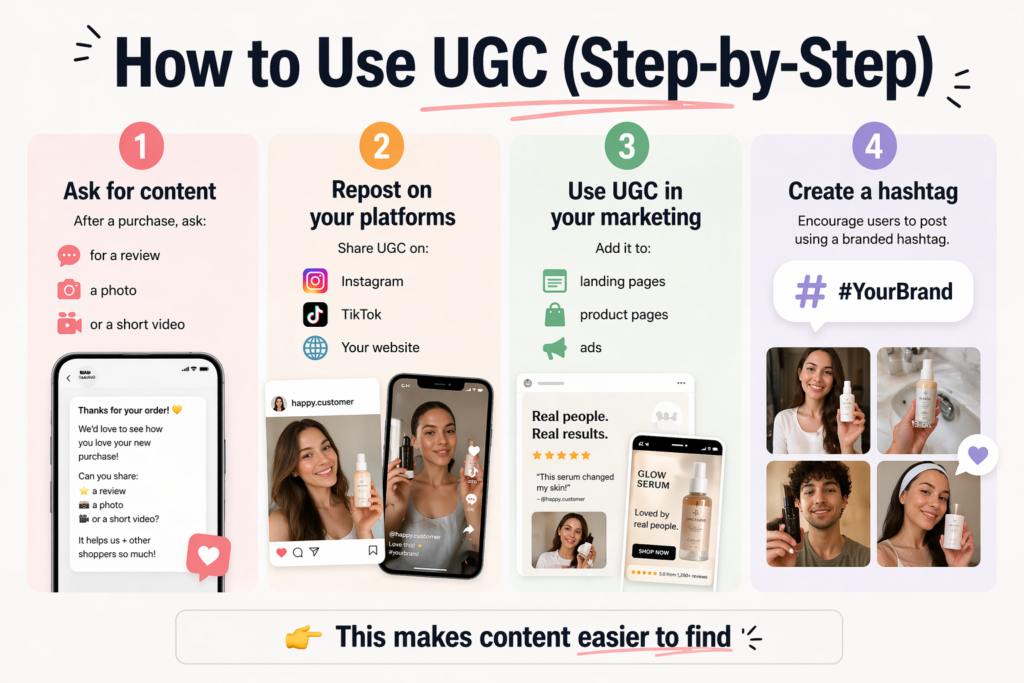
How to Use UGC (Step-by-Step)
1. Ask for content
After a purchase, ask:
- for a review
- a photo
- or a short video
2. Repost on your platforms
Share UGC on:
- TikTok
- Your website
3. Use UGC in your marketing
Add it to:
- landing pages
- product pages
- ads
4. Create a hashtag
Encourage users to post using a branded hashtag.
👉 This makes content easier to find
🚀 Pro Tips to Maximize Results
- Highlight your best customers
- Offer small rewards (discounts, shoutouts)
- Mix UGC with professional content
- Always keep it authentic
❌ Mistakes to Avoid
- Ignoring customer content
- Not asking permission before reposting
- Using only polished brand content
- Posting UGC without context
Why UGC Is the Future of Marketing
People don’t trust brands like before.
They trust:
- real experiences
- real opinions
- real people
👉 That’s exactly what UGC delivers.
Conclusion
User Generated Content is not just a trend — it’s a shift in marketing.
If you’re not using UGC yet, you’re missing one of the easiest ways to:
- build trust
- increase engagement
- boost sales
👉 Start simple. Start now. Let your users become your best marketers.
FAQs
What type of content qualifies as UGC?
UGC encompasses any content—photos, videos, reviews, testimonials, social media posts, blog comments—created by individuals rather than brands themselves. It can be explicit (like a dedicated review) or implicit (like someone sharing a photo of your product in daily use).How do I get legal permission to use UGC?
Always seek explicit permission. This can be done by commenting directly on the user’s post, sending a direct message, or using rights management features within UGC platforms. Clearly state how and where you intend to use their content.Can UGC truly impact SEO?
Absolutely. UGC contributes fresh, unique content to your website through reviews, Q&A sections, and blog comments. This helps search engines understand your content’s relevance, often including long-tail keywords, leading to improved search visibility and organic traffic.Is UGC only for B2C businesses?
While often associated with B2C, UGC is highly effective for B2B as well. Think case studies, testimonials, employee advocacy on LinkedIn, industry event posts, or reviews on software directories. Authenticity resonates across all business models.What’s the best way to start a UGC campaign?
Begin with clear goals. Pick one or two key platforms, create a simple hashtag campaign with a compelling call to action, and offer a small incentive. Start small, learn from your initial engagement, and then scale up.