

In the fast-evolving landscape of the Internet of Things (IoT), Low-Power Wide Area Network (LPWAN) technology has emerged as a game-changer. Designed to enable long-range communication with minimal power consumption, LPWAN is transforming industries by offering cost-effective and scalable connectivity solutions. From smart cities to industrial IoT, the applications of LPWAN continue to expand.

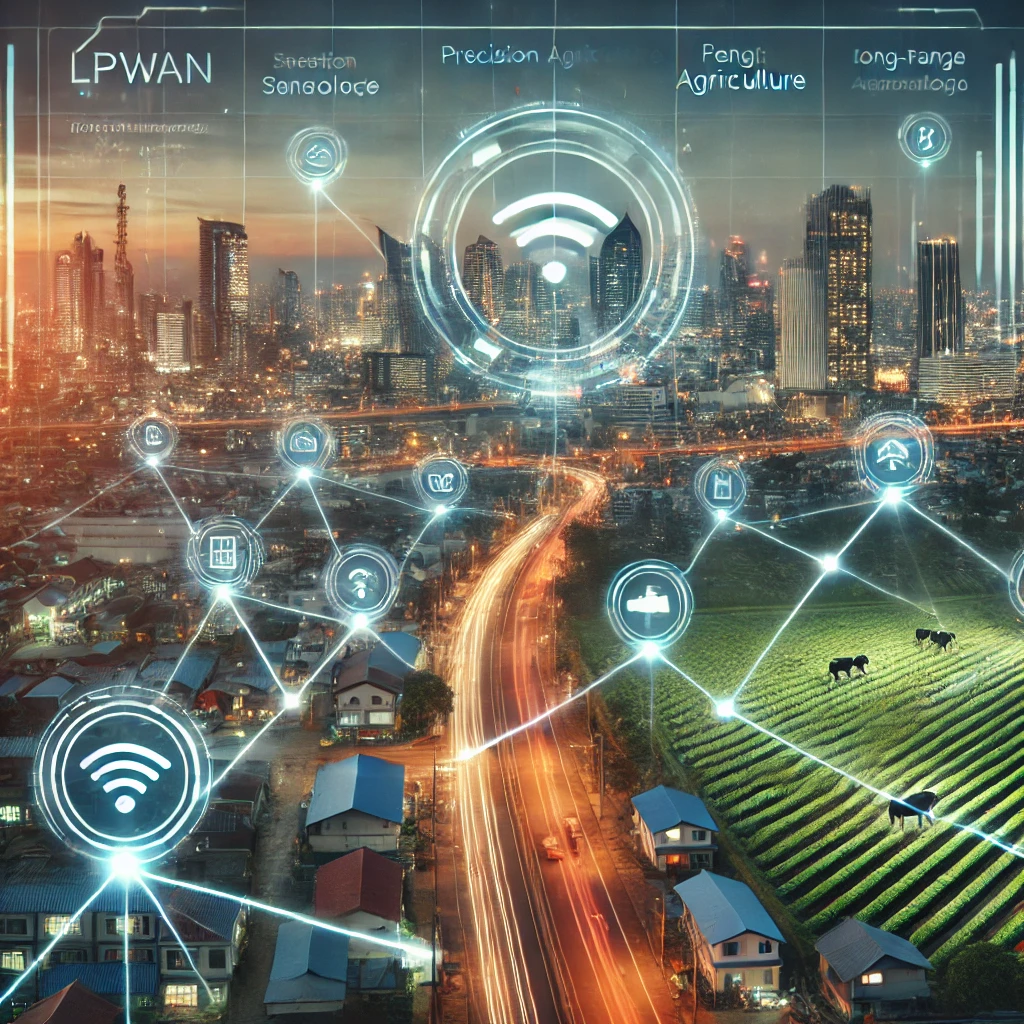
What is LPWAN Technology?
LPWAN technology is a type of wireless communication network specifically designed for low-power, long-range IoT applications. Unlike traditional cellular networks, LPWAN operates with lower data rates, extended coverage, and reduced energy consumption, making it ideal for battery-operated IoT devices.
Key Features of LPWAN Technology:
- Low power consumption: Ideal for battery-powered devices with long lifespans.
- Long-range connectivity: Covers vast areas, often reaching up to 10-40 km in rural areas.
- Low-cost deployment: Reduces infrastructure costs compared to traditional cellular networks.
- Supports massive IoT: Enables connectivity for thousands of devices in a single network.
LPWAN vs 5G: Which One is Better for IoT?
While 5G offers ultra-fast speeds and low latency, LPWAN technology is designed for low-power, long-range applications. Here’s a comparison:
| Feature | LPWAN | 5G |
|---|---|---|
| Power Consumption | Very Low | High |
| Coverage Range | Long (10-40 km) | Short (1 km or less) |
| Data Speed | Low | Ultra-fast |
| Device Capacity | High | Moderate |
| Ideal Use Cases | Smart meters, agriculture, industrial sensors | Real-time applications, video streaming |
For IoT applications requiring low data rates and long battery life, LPWAN is the preferred choice over 5G.
Best LPWAN Protocols: A Comparative Analysis
There are several LPWAN protocols, each with unique strengths:
- LoRaWAN (Long Range Wide Area Network):
- Open standard with strong security features.
- Ideal for smart cities, industrial automation, and logistics.
- NB-IoT (Narrowband IoT):
- Operates within licensed cellular spectrum.
- Suitable for smart metering, healthcare, and environmental monitoring.
- Sigfox:
- Ultra-narrowband technology with low-cost connectivity.
- Best for asset tracking and smart agriculture.
- Weightless:
- Open standard with flexible spectrum usage.
- Suitable for industrial IoT and smart grids.
Choosing the right LPWAN standard depends on factors such as deployment costs, range, and power efficiency.
LPWAN Applications: Transforming Industries
1. LPWAN technology in Smart Cities
Smart cities use LPWAN to enhance urban management, including:
- Smart street lighting: Optimizing energy usage.
- Waste management: Real-time bin monitoring.
- Traffic management: IoT-based traffic flow optimization.
2. LPWAN for Agriculture
The agricultural sector benefits from LPWAN in various ways:
- Precision farming: Soil and weather condition monitoring.
- Livestock tracking: Real-time location updates.
- Smart irrigation: Automated water control based on sensor data.
3. LPWAN for Industrial IoT
Industries leverage LPWAN for:
- Predictive maintenance: Monitoring equipment health.
- Supply chain optimization: Asset tracking and logistics automation.
- Remote monitoring: Managing industrial sensors in real-time.
4. LPWAN technology for Asset Tracking
Businesses use LPWAN for:
- Fleet management: Tracking vehicles across vast regions.
- Supply chain visibility: Enhancing logistics efficiency.
- Anti-theft solutions: Real-time location tracking.
LPWAN Range and Coverage: How Far Can It Go?
One of LPWAN’s biggest advantages is its ability to cover long distances with minimal power. Depending on the environment, LPWAN can reach:
- Urban areas: 2-5 km
- Suburban areas: 5-15 km
- Rural areas: 10-40 km
Its superior coverage makes LPWAN ideal for large-scale IoT deployments.
LPWAN Energy Efficiency: Maximizing Battery Life
Why is LPWAN energy-efficient?
- Devices spend most of their time in sleep mode, conserving power.
- Low data rates mean reduced energy consumption.
- Optimized protocols ensure minimal signal interference.
Many LPWAN-enabled devices can last up to 10 years on a single battery, making them highly cost-effective.
Conclusion: Why LPWAN technology is the Future of IoT
LPWAN technology is reshaping IoT connectivity, providing cost-efficient, long-range, and energy-saving solutions across multiple industries. As IoT adoption grows, LPWAN will continue to play a pivotal role in connecting billions of smart devices worldwide.
📌 Looking to integrate LPWAN into your business? Explore more insights on our blog or subscribe to our newsletter for the latest trends in IoT connectivity!