User-Generated Content (UGC): A Complete Marketing Guide

Photo of author

By salut2100

Are you struggling to cut through the digital noise and connect authentically with your audience? In an era saturated with brand-created content, consumers increasingly seek genuine endorsements and relatable experiences. This shift makes strategies like User-Generated Content (UGC) not just a trend, but a foundational pillar for modern digital marketing.

Harnessing the power of your community can dramatically amplify your brand’s reach and credibility. This guide will walk you through everything you need to know about implementing a robust UGC strategy, providing a comprehensive blueprint for entrepreneurs, startups, and established online businesses alike. Let’s dive into User-Generated Content (UGC): A Complete Marketing Guide, understanding its mechanics, benefits, and the steps involved to build an effective program, especially when considering how to build a ugc strategy for small ecommerce brands.

Tools & Requirements

Implementing a successful UGC strategy requires a mix of foundational platforms and specialized tools. At its core, you’ll need active presences on relevant social media platforms where your audience congregates (e.g., Instagram, TikTok, Facebook, YouTube, X). For collecting, curating, and managing UGC, dedicated platforms like Taggbox, Yotpo, Pixlee, or Shortstack are invaluable.

These tools often feature rights management, analytics, and embedding capabilities. Additionally, a robust email marketing platform (e.g., Mailchimp, HubSpot, Klaviyo) is crucial for outreach and incentive delivery. A Content Management System (CMS) like WordPress is essential for showcasing UGC on your website, and analytics tools (Google Analytics, social media insights) are vital for tracking performance. Optional alternatives include less specialized tools like simple Google Forms for collection, combined with manual social listening, for those on a tight budget.

Setup & Implementation Timeline

User Generated Content UGC A Complete Marketing Guide 2

The timeline for setting up and implementing a UGC strategy can vary based on your existing infrastructure and team size. Initial strategy and goal definition might take 1-2 weeks. This includes identifying target platforms, defining content types, and outlining moderation guidelines. Integrating UGC aggregation tools and setting up tracking usually takes another 3-5 days.

The learning curve for most modern UGC platforms is relatively low, typically a few days for basic functionality, though mastering advanced features can take longer. You’ll likely see initial trickle of user submissions within 2-4 weeks of launching your first clear call to action. However, significant, measurable results—such as increased engagement, website traffic, or conversions attributable to UGC—typically begin to materialize within 2-3 months as content volume grows and is strategically deployed across various touchpoints.

Step-by-Step Implementation Guide

User Generated Content UGC A Complete Marketing Guide 1

Embarking on a UGC strategy requires a methodical approach to ensure authenticity and effectiveness. Here’s how to build a robust program:


  1. Define Your Goals & Audience: Clearly articulate what you want to achieve. Is it brand awareness, engagement, trust, or conversions? Understanding your target audience’s preferred platforms and content styles is paramount. For instance, if you’re exploring how to build a ugc strategy for small ecommerce brands, your goal might be direct product reviews and unboxing videos.


  2. Choose Platforms & Tools: Select social media channels and specialized UGC tools that align with your audience and content goals. Ensure your chosen tools offer robust rights management and easy content aggregation.


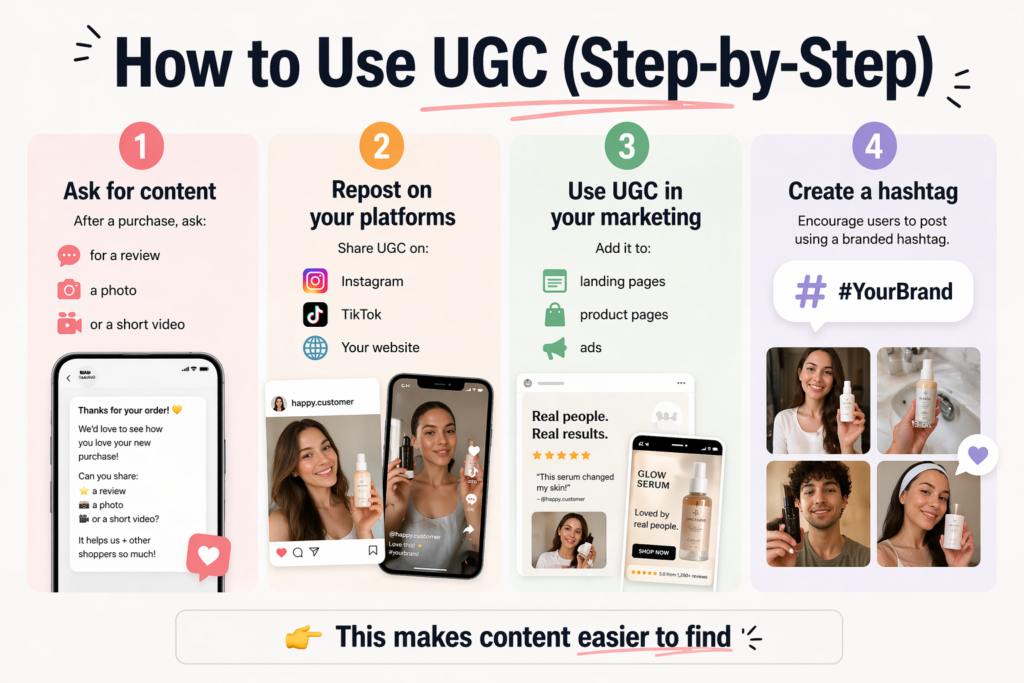
  3. Create Clear Guidelines & Calls to Action (CTAs): Develop specific guidelines for content submission, including hashtags, tagging instructions, and content quality expectations. Your CTAs should be compelling and easy to follow, making it simple for users to participate.


  4. Incentivize & Promote: While authentic passion drives much UGC, incentives can significantly boost participation. This could be public recognition, discounts, exclusive access, or entry into a contest. Promote your UGC campaigns widely across your website, social media, and email newsletters.


  5. Collect, Curate & Get Permissions: Use your chosen tools to collect UGC. Rigorously curate submissions to ensure quality and brand alignment. Crucially, always obtain explicit permission from creators before reusing their content, especially for commercial purposes. This is a non-negotiable legal and ethical step.


  6. Distribute & Amplify: Don’t just collect content; use it! Feature UGC prominently on your website (e.g., product pages, galleries), social media channels, email campaigns, and even in paid advertisements. Showcasing user content validates participants and inspires others.


  7. Measure & Optimize: Track key metrics like engagement rates, conversion rates (if UGC is on product pages), website traffic from UGC galleries, and brand sentiment. Regularly analyze what content performs best and refine your strategy based on these insights. This iterative process is key to mastering User-Generated Content (UGC): A Complete Marketing Guide.


Key Benefits & Business Impact

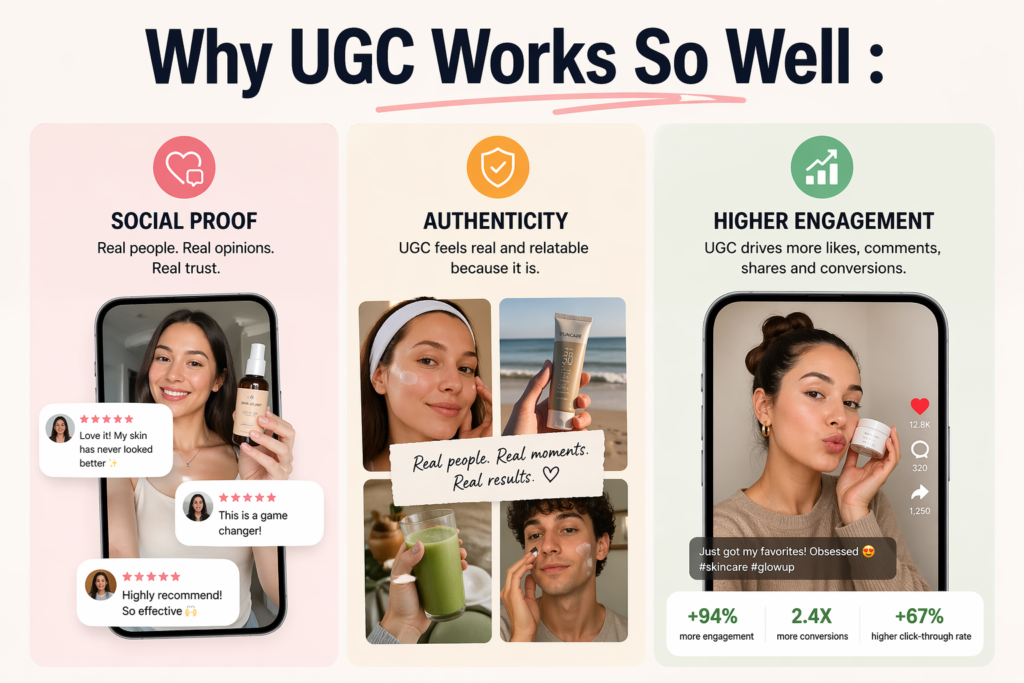
The impact of User-Generated Content extends far beyond mere engagement metrics, translating directly into tangible business advantages. Primarily, UGC fosters unparalleled trust and authenticity. Consumers are significantly more likely to trust content from peers than from brands directly, leading to higher engagement rates and reduced skepticism. This authentic social proof can drastically improve conversion rates on product pages or landing pages.

Furthermore, UGC provides a continuous stream of fresh, diverse content at a fraction of the cost of traditional content creation, significantly improving content marketing ROI. From an SEO perspective, UGC adds unique, keyword-rich content to your site, enhancing visibility. For businesses considering how to build a ugc strategy for small ecommerce brands, this means increased product discovery and improved search rankings. The community-building aspect also strengthens customer loyalty and advocacy, turning customers into passionate brand evangelists. Overall, a well-executed program around User-Generated Content (UGC): A Complete Marketing Guide can deliver scalable growth, enhanced brand perception, and a formidable competitive edge.

Advanced Tips, Alternatives, or Optimization Strategies

To elevate your UGC game, consider integrating advanced tactics. Leverage AI-powered tools for sentiment analysis of text-based reviews or image recognition to automatically categorize visual UGC. Explore personalized UGC campaigns by segmenting your audience and prompting them for content specific to their purchasing habits or interests.

Integrate UGC seamlessly into your paid advertising campaigns on social media; ads featuring user content often outperform brand-created ads. For larger businesses, consider developing a dedicated “brand ambassador” program to nurture a core group of enthusiastic creators. Explore micro-influencer collaborations as a hybrid UGC strategy. On the optimization front, A/B test different CTAs, incentives, and display formats for your UGC to discover what resonates most with your audience. Don’t shy away from video UGC; it often drives higher engagement. Finally, always be on the lookout for emerging platforms where your audience might be creating content and adapt your strategy accordingly.

Common Mistakes to Avoid

User Generated Content UGC A Complete Marketing Guide

While UGC offers immense potential, several pitfalls can derail your efforts. A common mistake is failing to obtain proper legal permissions from content creators. Always ensure you have explicit consent to use their content for commercial purposes to avoid copyright issues. Another error is neglecting content quality control; allowing low-quality or off-brand submissions to be published can harm your brand image.

Inconsistent or unclear calls to action often result in low participation rates; your instructions must be crystal clear. Many businesses also fail to adequately promote their UGC campaigns, expecting content to simply appear. Ignoring analytics and treating UGC as a one-off campaign rather than a continuous strategy will limit long-term impact. Lastly, over-curating or excessively editing user content can strip away its authenticity, defeating the purpose of UGC. Strike a balance between quality and genuine expression.

Maintenance, Updates & Long-Term Optimization

A thriving UGC program is never static. Regular maintenance involves continuously monitoring incoming content, moderating submissions to maintain quality and brand safety, and engaging with creators by liking, commenting, and sharing their posts. It’s crucial to regularly review and update your UGC guidelines to reflect new platform features, content trends, or legal requirements.

Stay informed about privacy regulations (like GDPR or CCPA) and adjust your data collection and consent processes as needed. Periodically audit your UGC tools and consider upgrades or alternatives that offer better features or scalability. Long-term optimization includes refreshing your CTAs, experimenting with new types of content prompts, and ensuring your UGC remains seamlessly integrated across all your marketing channels. Archiving older content while keeping the best evergreen pieces visible helps manage content volume and maintain freshness.

Conclusion

In today’s dynamic digital landscape, User-Generated Content stands out as a powerful, authentic, and cost-effective marketing strategy. By empowering your customers to become storytellers, you not only build invaluable trust and community but also unlock a treasure trove of engaging content that drives real business results.

From boosting engagement and fostering loyalty to enhancing SEO and improving conversion rates, the benefits are clear. We’ve explored User-Generated Content (UGC): A Complete Marketing Guide, providing a roadmap for establishing and optimizing your program. Whether you’re a burgeoning startup or seeking to understand how to build a ugc strategy for small ecommerce brands, the principles remain the same: cultivate authenticity, empower your audience, and watch your brand thrive. Don’t just market to your customers; market with them.

FAQs


  • What type of content qualifies as UGC?
    UGC encompasses any content—photos, videos, reviews, testimonials, social media posts, blog comments—created by individuals rather than brands themselves. It can be explicit (like a dedicated review) or implicit (like someone sharing a photo of your product in daily use).


  • How do I get legal permission to use UGC?
    Always seek explicit permission. This can be done by commenting directly on the user’s post, sending a direct message, or using rights management features within UGC platforms. Clearly state how and where you intend to use their content.


  • Can UGC truly impact SEO?
    Absolutely. UGC contributes fresh, unique content to your website through reviews, Q&A sections, and blog comments. This helps search engines understand your content’s relevance, often including long-tail keywords, leading to improved search visibility and organic traffic.


  • Is UGC only for B2C businesses?
    While often associated with B2C, UGC is highly effective for B2B as well. Think case studies, testimonials, employee advocacy on LinkedIn, industry event posts, or reviews on software directories. Authenticity resonates across all business models.


  • What’s the best way to start a UGC campaign?
    Begin with clear goals. Pick one or two key platforms, create a simple hashtag campaign with a compelling call to action, and offer a small incentive. Start small, learn from your initial engagement, and then scale up.


Leave a Comment